When it comes to buying or renting an RV, one of the most important factors to understand is RV dimensions. From width and height to length and weight, knowing the exact RV dimensions can make or break your travel experience. Whether you’re navigating narrow highways, planning to park at a national park, or simply trying to ensure your family has enough living space, dimensions matter more than many new RVers realize.
Unlike cars, RVs aren’t one-size-fits-all. They come in a wide range of classes, shapes, and layouts—each designed for different lifestyles, travel needs, and budgets. A compact camper van may be perfect for solo travelers or couples, while a 40-foot motorhome offers luxury living for families or long-term road trips. But choosing the wrong size could mean facing restrictions at campgrounds, difficulty maneuvering, or even costly damage on the road.
This guide breaks down everything you need to know about RV dimensions—from average widths, heights, and lengths to weight ratings and towing requirements. You’ll also learn how to measure your RV correctly, what restrictions to expect at campgrounds, and how to choose the right RV size for your travel style.
By the end, you’ll have a clear, data-backed understanding of RV dimensions so you can rent, buy, or drive with confidence.
Why RV Dimensions/Size Matters
When it comes to planning an RV adventure, size truly matters more than most first-time renters realize. Understanding RV dimensions—whether it’s the height, width, length, or weight—can make the difference between a smooth journey and a stressful one.
Safety on the Road
Knowing your RV’s height ensures you won’t run into problems with low bridges, tunnels, or tree branches. Weight awareness is just as important, especially for braking, handling, and staying within legal road limits.
Campground Compatibility
Not all campgrounds and RV parks can accommodate every rig. Many have maximum length or width restrictions, and if your RV doesn’t fit, you may be turned away. Having accurate measurements ahead of time guarantees you’ll choose a campsite that matches your RV size.
Comfort and Convenience
RV size also affects your overall comfort. Larger rigs often come with more living space and storage, while smaller models are easier to maneuver in tight spaces. Striking the right balance ensures your trip feels both enjoyable and practical.
Legal and Insurance Requirements
Certain roads, states, and even insurance policies have rules tied to RV dimensions. Exceeding posted limits or misreporting your RV’s size could lead to fines—or worse, denied claims.
Simply put, understanding RV dimensions isn’t just about numbers—it’s about safety, accessibility, and peace of mind. Whether you’re renting for the first time or planning your next big trip, knowing your rig’s true dimensions will save you from headaches and help you travel with confidence.
Drivable Motorhome Dimensions
When people refer to motorhomes, they are talking about a variety of recreational vehicles, including some you might not have expected! Among them, Class A motorhomes stand as the largest. These bus-style RVs can accommodate up to 10 people and typically feature at least one full bathroom (sometimes two!), a kitchen complete with a fridge, stove, oven, microwave, and sink, a cozy entertainment area with seating and TV, a bedroom, and additional seating that transforms into beds at night.
Average Dimensions of Class A Motorhomes
Class A motorhomes vary widely in terms of size. On average, they stand between 11 to 13 feet 6 inches tall, though this measurement usually excludes air conditioners and any other rooftop equipment like satellite dishes. It’s essential to factor these items into your height calculation before heading out to ensure your RV can safely pass under bridges, overhangs, or other obstacles.
In terms of width, most Class A RVs measure between 8 and 8 1/2 feet wide, not taking into account slideouts. Some motorhomes can nearly double in width when the slideouts are extended, so make sure to know the total width of your RV when the slideouts are deployed, especially when parking at campgrounds.
Class A motorhomes also come in lengths ranging from 26 to 45 feet. Knowing this dimension is crucial for driving on winding roads or through areas with length or weight restrictions.
Weight-wise, Class A RVs can vary significantly. Smaller models might weigh around 13,000 pounds, while larger ones can top 30,000 pounds. It’s a good idea to weigh your motorhome when fully loaded to better understand its true weight.
Average Dimensions of Class B Motorhomes
Class B motorhomes, often referred to as campervans, are the smallest and lightest type of motorhome. While some models are just a simple bed on wheels, more advanced versions may include a small kitchen, a toilet, and a wet bath. Typically, these campervans accommodate 1-2 people, though some can sleep up to four.
Most Class B RVs range from 8 1/2 to 11 feet in height and weigh between 6,000 to 11,000 pounds. These campers are about 6 to 7 1/2 feet wide and generally span 18 to 24 feet in length.
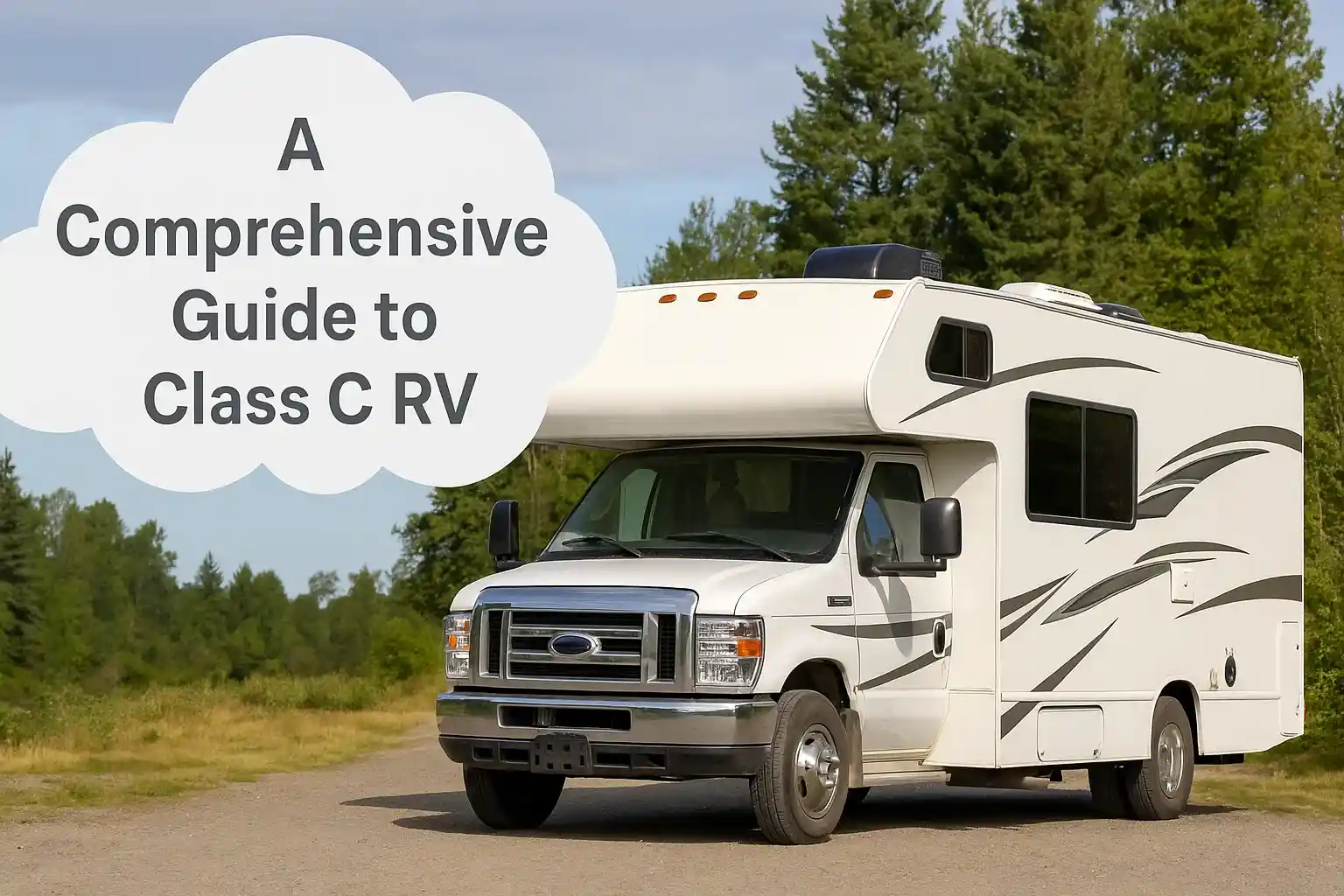
Average Dimensions of Class C Motorhomes
Class C motorhomes are a happy medium between the vast Class A and compact Class B models—making them the perfect balance for many RVers. Often built on a truck chassis, they offer more room than a campervan while being easier to drive than the large Class A. Class C RVs usually feature a kitchen, bathroom with a shower, bedroom, overhead sleeping space, and convertible dining or entertainment areas.
These motorhomes typically stand between 10 to 11 feet tall, weigh between 10,000 to 20,000 pounds, and have widths ranging from 8 to 8 1/2 feet. As with other motorhomes, be sure to account for any rooftop additions when calculating height.
The length of Class C motorhomes typically ranges from 25 to 35 feet, striking a good balance between drivability and space.
Towable RV Dimensions
Towable RVs, including travel trailers, fifth wheels, and pop-up campers, offer a range of sizes and towing needs, giving RV enthusiasts the flexibility to choose based on their preferences and vehicle capabilities. Travel trailers are versatile and can be towed by most family vehicles, while fifth wheels, which are larger, typically require a pickup truck for towing.
Travel Trailers
Travel trailers are available in various sizes, from compact teardrop campers to much larger units, making them a popular option for a wide range of RVers. On average, these trailers are around 20 feet in length and 8 feet in width, offering a good balance of space without being too difficult to tow. Some smaller models, like the Airstream Bambi, measure just 16 feet, providing a more compact option for those who prefer simplicity and maneuverability.
One of the main attractions of travel trailers is their versatility. They can be towed by many family cars and SUVs, making them an excellent choice for spontaneous trips, weekend getaways, or longer adventures. Their size range and towability make them a go-to option for families and solo travelers alike.
Fifth Wheels
Fifth wheels are larger towable RVs that provide significantly more living space compared to travel trailers. These rigs typically range in length up to 40 feet, offering spacious interiors with multiple rooms or areas for sleeping, dining, and relaxing. Their design allows for a better turning radius compared to travel trailers, making them easier to maneuver, especially on highways.
However, towing a fifth wheel does present some challenges, particularly when navigating tighter streets or winding roads. Due to their size, you’ll need a pickup truck with a heavy-duty towing capacity. Despite this, fifth wheels are highly desirable for RVers who prioritize comfort and spaciousness during their travels.
Pop-Up Campers
Pop-up campers (or folding campers) offer a compact and efficient solution for campers seeking a lightweight, easy-to-tow RV. When folded down, these trailers usually measure between 8 to 12 feet in length, 7 feet in width, and stand around 4 to 5 feet tall, making them highly portable and easy to store.
Once set up, pop-up campers expand in length, ranging from 16 to 25 feet, with heights extending to around 8 feet. This gives them a surprising amount of living space, often including beds, a small kitchenette, and sometimes even a bathroom. Pop-up campers are perfect for those who want the convenience of a tent with the added comfort of basic amenities, all without needing a large towing vehicle.
RV Dimensions Regulations: State and National Parks
Before embarking on your next RV adventure, it’s crucial to verify whether your destination can accommodate the size of your recreational vehicle. Both state and national parks often have specific regulations that can impact where you can park, set up, or even if you’re allowed to stay.
State Park Regulations
State parks are a wonderful way to immerse yourself in nature, but they come with their own set of rules for RVs. The most critical consideration is that each state park may impose specific length, width, and height restrictions. These limits can vary significantly from park to park, so it’s essential to do your homework for each destination you plan to visit.
Some parks may even require special permits for oversized vehicles, so knowing these details ahead of time can save you from unexpected setbacks. Larger RVs, in particular, can face difficulty finding suitable parking spaces—not only within the park itself but also in urban areas and other popular travel spots nearby.
National Park Restrictions
National parks tend to have more strict restrictions, particularly when it comes to RV size. Many national park campgrounds impose length limits, and some parks might not be able to accommodate larger RVs at all. If they do allow big rigs, the availability of large spots can be limited.
Typically, most national parks can accommodate RVs ranging from 25 to 40 feet in length. However, some parks may have specific length limitations, with certain sites offering spaces for vehicles anywhere from 19 feet to 42 feet long. It’s a good idea to check the exact specifications for each national park campground before you set out to ensure a smooth stay.
Campground Restrictions
Private campgrounds often have specific limitations on the size of RVs, including length, height, and other dimensions. These restrictions are usually due to factors like narrow roads, tight turns, or potential obstructions such as overhangs or low-hanging branches. Some campgrounds simply don’t have enough space to accommodate larger rigs, while others may require careful maneuvering to get into a site. Always check the campground’s guidelines before booking to ensure your RV fits within their size limits, saving you the hassle of finding an alternative spot upon arrival.
RV Storage
If you plan on storing your RV—whether it’s in a covered facility or at home—you’ll need to know your RV’s exact dimensions to ensure it fits into the storage space. Covered storage, in particular, often comes with strict size limits, so knowing the length, height, and width of your rig is key. This also applies if you’re purchasing a custom cover to protect your RV while it’s parked at home. Measuring your RV accurately will help you avoid any surprises and ensure the cover fits snugly, offering your vehicle the protection it needs during downtime.
How to Measure Your RV Dimensions Correctly
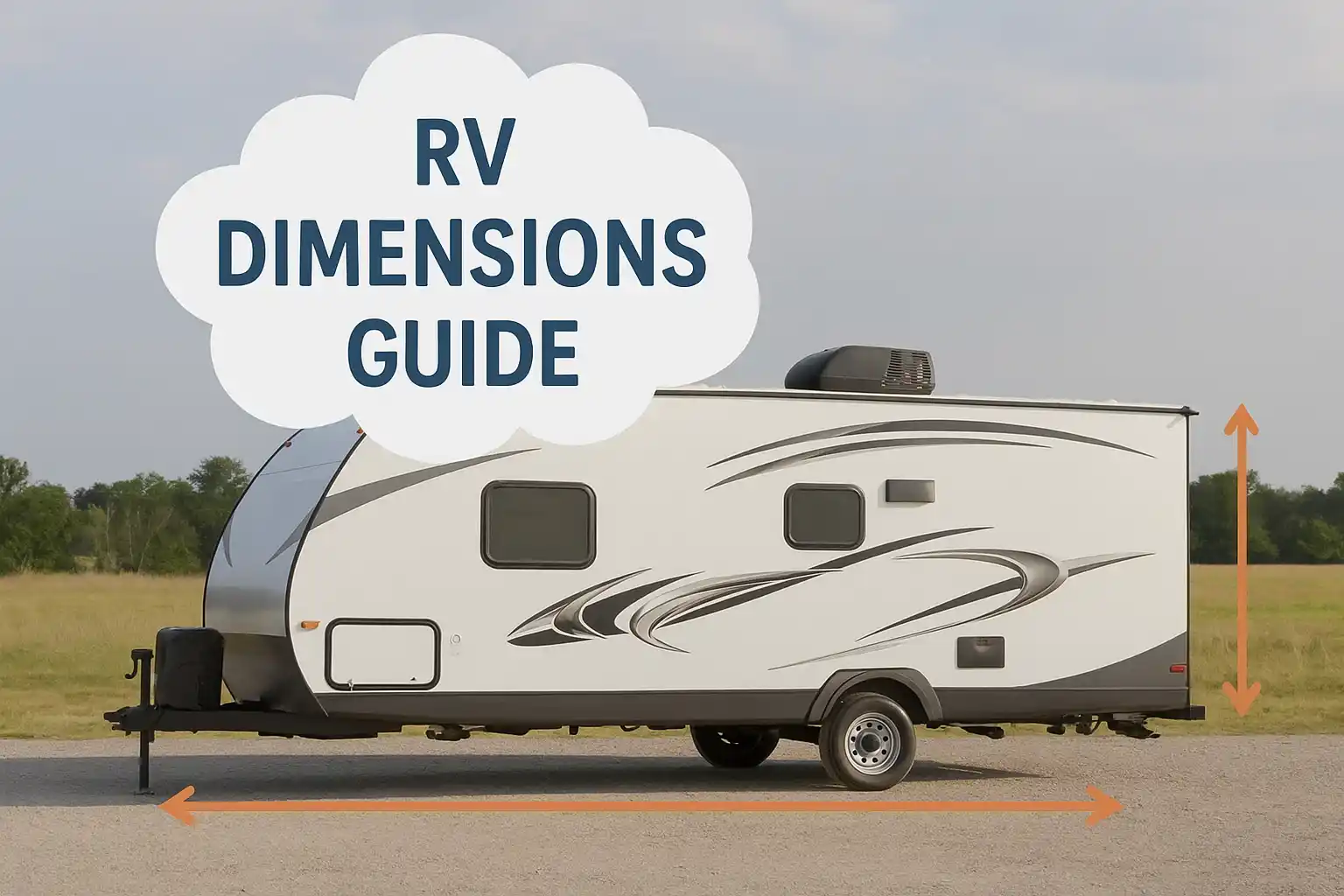
Knowing your exact rv dimensions isn’t just a matter of curiosity — it’s essential for safety, campground access, and avoiding expensive mistakes. Many first-time renters rely on the manufacturer’s brochure, but those numbers don’t always account for real-world add-ons like bike racks, roof equipment, or tow hitches. Here’s how to measure your rv dimensions the right way.
What You Need First
-
A long tape measure (something at least 25+ ft for big rigs)
-
A helper, especially for height or long‑length measurements
-
A flat, level surface to park the RV (to eliminate tilt when measuring)
-
Something to record your measurements (phone, notebook, app)
What Dimensions to Measure
-
Length
-
Measure from the frontmost point of the vehicle (bumper or hitch) to the rearmost point (bumper, ladder, or spare tire rack). Include any fixed accessories at front or back.
-
If towable, measure both the trailer and tow vehicle separately and measure them together when hooked up, because total length can be important for sites, road/toll restrictions, etc.
-
-
Width
-
Measure the widest point of the RV body. Usually this means including slide‑outs (if fully extended) and any permanent attachments that extend beyond the body.
-
Usually exclude mirrors or awnings if they are not rigid or permanent — but if they are frequently used or always there, you may want to know those dimensions too for clearance.
-
-
Height
-
Measure from the ground (on level surface) to the highest fixed point of the RV. This includes things like air conditioning units, vents, antennae, solar panels, and permanent rooftop accessories.
-
Do multiple height measurements (over each roof structure if needed), since some parts of the roof may stick up more. Use the highest measurement as your official height.
-
-
Weight
-
You’ll want both “dry” weight (manufacturer’s number without load) and “loaded” weight (including water, fuel, gear, passengers) to know how your RV really sits. While specific sources vary, this is widely advised.
-
Tips for Accuracy & Practical Use
-
Always measure with everything installed that you plan to use on trips (bike racks, propane tanks, rooftop equipment). These alter dimensions, especially height and length.
-
Take each measurement more than once—ideally from different spots, especially height and width—to catch any irregularities.
-
Leave some margin (“clearance”) above and around your measured dimensions when planning routes, parking spots, or storage spaces. For example, extra feet in height for bridges, in width for turning, etc.
-
Document these dimensions (length, width, height, loaded weight) in both your normal measuring units and in metric if possible. Keep them handy (glove box, phone, etc.) so you can quickly reference when booking campgrounds, checking road restrictions, or entering tunnels.
Read More: The Ultimate RV Rental Insurance Guide
Why Adventurers Choose Our RV Rentals in Louisiana
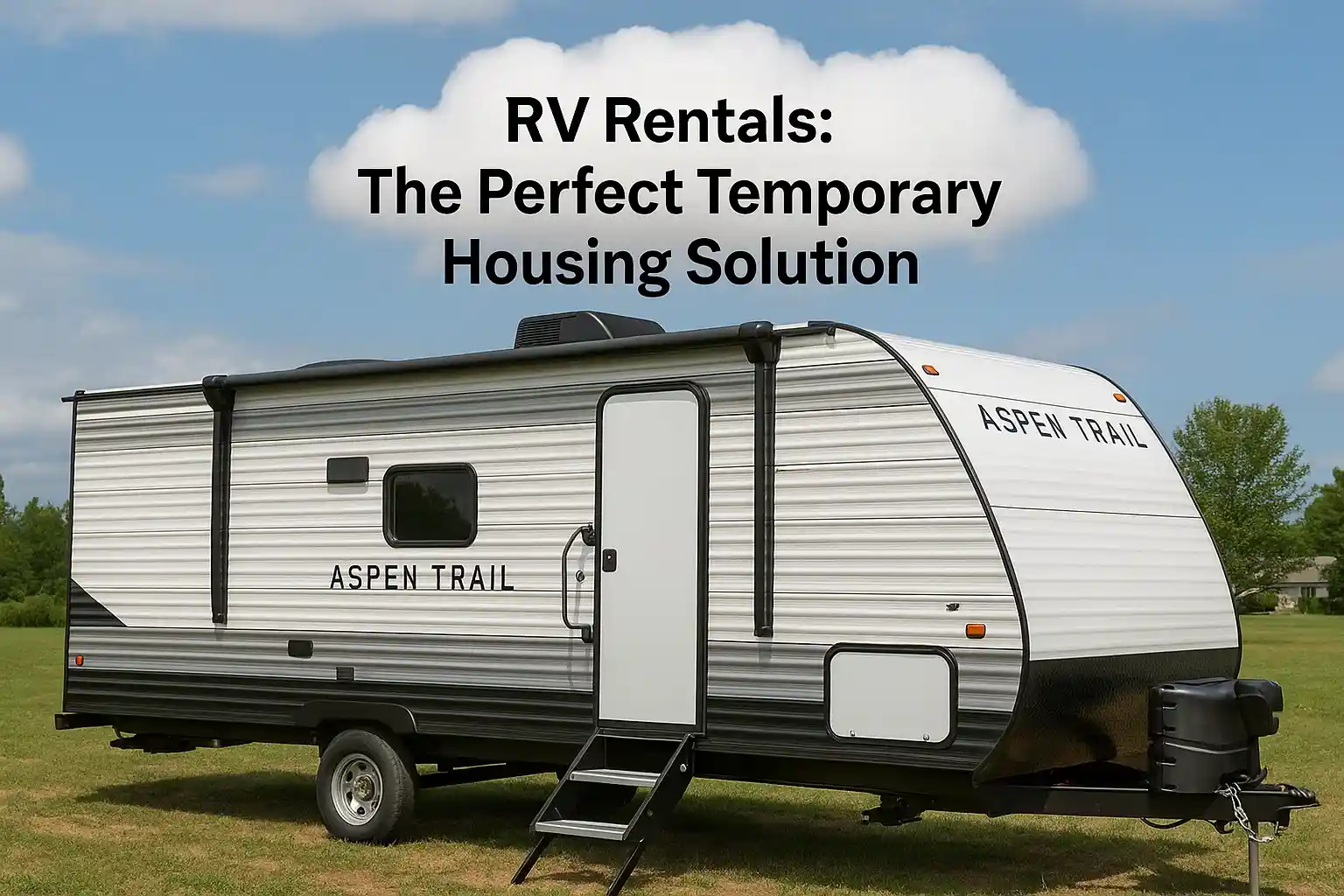
When it comes to RV rentals, the difference between an average trip and an unforgettable adventure lies in the details. At Adventure Rent A Camper, our 2023 Dutchmen Aspen Trail 3210BHDS Travel Trailer is fully stocked and designed with your comfort in mind. Here’s what makes our RV stand out:
Full Bathroom Setup
-
Inside & outside showers
-
Bathroom sink & toilet
-
Hot water supply
-
Essentials included: toilet paper, bath towels, and toiletries
Fully Equipped Kitchen
-
Refrigerator, oven, stove/range, microwave, and kitchen sink
-
Coffee maker and cooking basics
-
Pots, pans, dishes, and utensils
-
Dining table for family meals
Comfortable Sleeping Arrangements
-
Sleeps up to 7 guests
-
Queen bed, dinette conversion, fold-out sofa, and bunk beds
-
Fresh pillows, sheets, and blankets provided
Climate & Comfort
-
Air conditioning and heating for year-round travel
-
Spacious layout with extra storage
-
Awning and leveling jacks for easy setup
Hookups & Power
-
Water, electric, and sewer hookups
-
Inverter for extra power support
-
Propane tank (40 lbs) for cooking & heating
Entertainment & Tech
-
TV/DVD player, audio inputs, and radio
-
Backup camera for easy parking and safety
Trip-Ready Essentials
-
Cookware & utensils
-
Bathroom necessities
-
Outdoor gear like chairs and rugs (optional add-ons)
Why Choose Our RV?
Renting with us means no towing stress, no hassle, and everything you need is already on board. Whether you’re heading to a Louisiana festival, planning a family camping trip, or just exploring the open road, our Aspen Trail RV ensures you travel in comfort and style.
Conclusion: RV Dimensions
Understanding rv dimensions is one of the most important steps in planning a successful RV trip. From the height that clears low bridges to the width that fits into campground spaces and the weight your vehicle can safely tow, every measurement impacts safety, comfort, and convenience. By knowing your RV’s exact dimensions — and how they compare to campground or road restrictions — you’ll avoid costly mistakes, stressful detours, and potential damage to your rig.
Whether you’re renting for the first time or considering an upgrade, take the time to measure carefully and choose an RV size that matches your travel style. The right knowledge ensures your journey is smooth, enjoyable, and focused on making memories instead of worrying about logistics.
Book Now
Ready to hit the road in comfort and style? Adventure Rent A Camper makes it easy to book your RV for travel, events, or weekend getaways. Our team handles the hard work so you can enjoy a hassle-free experience from start to finish.
Call Us: (225) 955-5484
Email: info@adventurerentacamper.com
Website: www.adventurerentacamper.com
Book Online: Reserve Your Camper Here
Don’t wait—our RVs book quickly, especially during peak travel and event seasons. Reserve your camper today with Adventure Rent A Camper and travel stress-free, with all the comforts of home.